

Unit registry · system inspections · Refrigerant Record
Every unit on the record. Every circuit accounted for.
Frigalto is built to keep each rooftop unit, chiller, AHU, VRF system and cooling tower in your clients’ buildings on its own record: inspected to the protocol for its type, its findings followed to closure, its refrigerant logged circuit by circuit — and all of it compiled into the Uptime Report your client reads at renewal.
Unit record · sample
RTU-07 · Rooftop unit- Ashcombe Tower · Roof — east
- System inspection · Oct 14
- Circuit 1 · R-410A · leak check logged
- Condenser coil · attention needed!
Client · building · plant area · unit · circuit
From the client’s portfolio down to one refrigerant circuit.
Your engineers think in buildings, plant areas and units — so the record does too. A client holds buildings; a building holds plant areas; each plant area holds its units; each unit holds its circuits. Every inspection, finding and refrigerant entry lands at the level it belongs to, and stays there when an engineer moves on.
- 01ClientAshcombe Property Group3 buildings on one service agreement
- 02BuildingAshcombe TowerBuilding specification: 12 units
- 03Plant areaRoof — east4 units on this roof
- 04UnitRTU-07 · Rooftop unitInstalled, serviced, inspected — one history
- 05CircuitCircuit 1 · R-410ACharge, recovery, leak checks and top-ups
One protocol per unit type
A chiller isn’t a split system. The checklist knows it.
Each unit type carries its own system inspection: the components your engineers check on that kind of plant, in the order they check them. Open the unit and its protocol opens with it.
Rooftop units
Compressor · condenser coil · evaporator coil · fans and belts · filters · electrical · controls
Chillers
Compressors · condenser and evaporator · oil · flow · electrical · controls
Air handling units
Fans and belts · filters · coils · dampers · drain pan · controls
VRF systems
Outdoor units · branch boxes · indoor units · electrical · controls
Split systems
Outdoor unit · indoor unit · coils · filters · drain · controls
Cooling towers
Fill and basin · drift eliminators · fan and gearbox · water treatment · controls
Heat pumps, packaged units and anything else you look after get a protocol of their own. You set the components; the protocol is yours.
The maintenance round
Roof to plant room, unit by unit — and the record writes itself.
One engineer, one building, a quarterly round on Ashcombe Tower’s east roof. Each step below is a tap on the phone; beside it, the round’s record as it fills.
- Start the roundThe round opens with the building’s units for today, in the order your engineer walks them.
- Open the unitScan RTU-07’s label or pick it from the list. Its record, its last findings and its protocol open together.
- Work the protocolCompressor, coils, fans, filters, electrical, controls — each component marked as it’s checked, nothing skipped by accident.
- Log what you find, where you find itThe condenser coil is fouled. A photo, a line, a severity: attention needed. It joins the unit’s photo timeline.
- Log the refrigerant workA leak check on circuit 1, logged against the circuit with the refrigerant, the engineer and the time. Nothing typed up later.
- Next unit, then close the roundRTU-08 checks out routine. The round closes with every unit accounted for, and the findings waiting for the office.
Maintenance round · sampleAshcombe Tower · Roof — east
- RTU-05Routine
- RTU-06Routine
- RTU-07Attention needed
- RTU-08Routine
- Compressor
- Condenser coil
- Evaporator coil
- Fans and belts
- Filters
- Electrical
- Controls
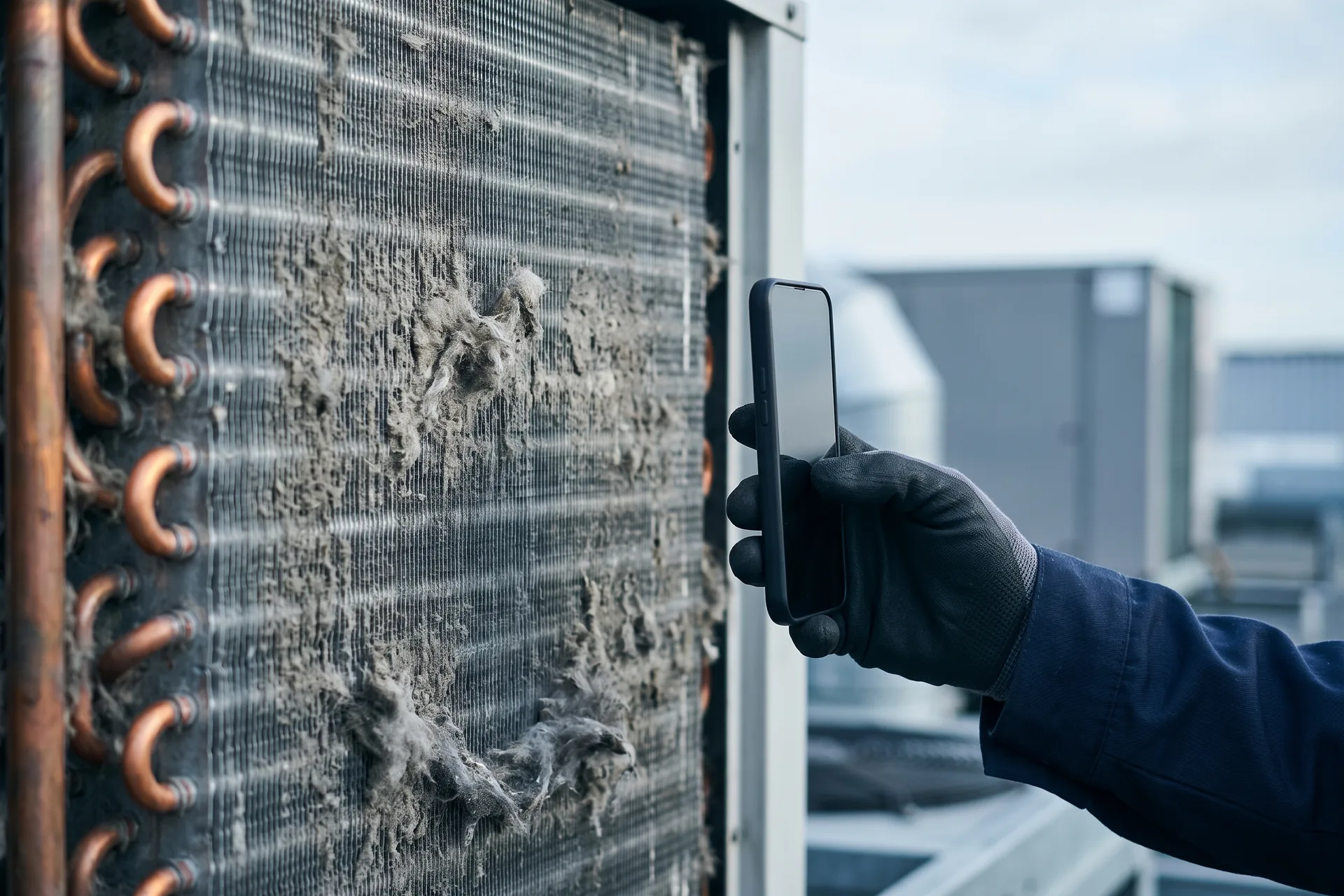 Condenser coil fouledDebris across the face of the coil. Clean at next visit or quote now.1 photo · added to the timelineAttention needed
Close roundRound closed · 4 of 4 units
Illustration · invented client · sample data
Deficiencies to closure
A finding isn’t closed just because it’s written down.
Every finding carries its severity — routine, attention needed or deficiency — and stays open until it’s closed. The photos stack up on the unit in date order, so the next engineer, the office and your client all see the same story.
- Grade it where you find it: routine, attention needed or deficiency.
- Quote the repair as a Service Proposal, or fix it on the next visit.
- Close it with an after photo — the unit’s photo timeline keeps both.
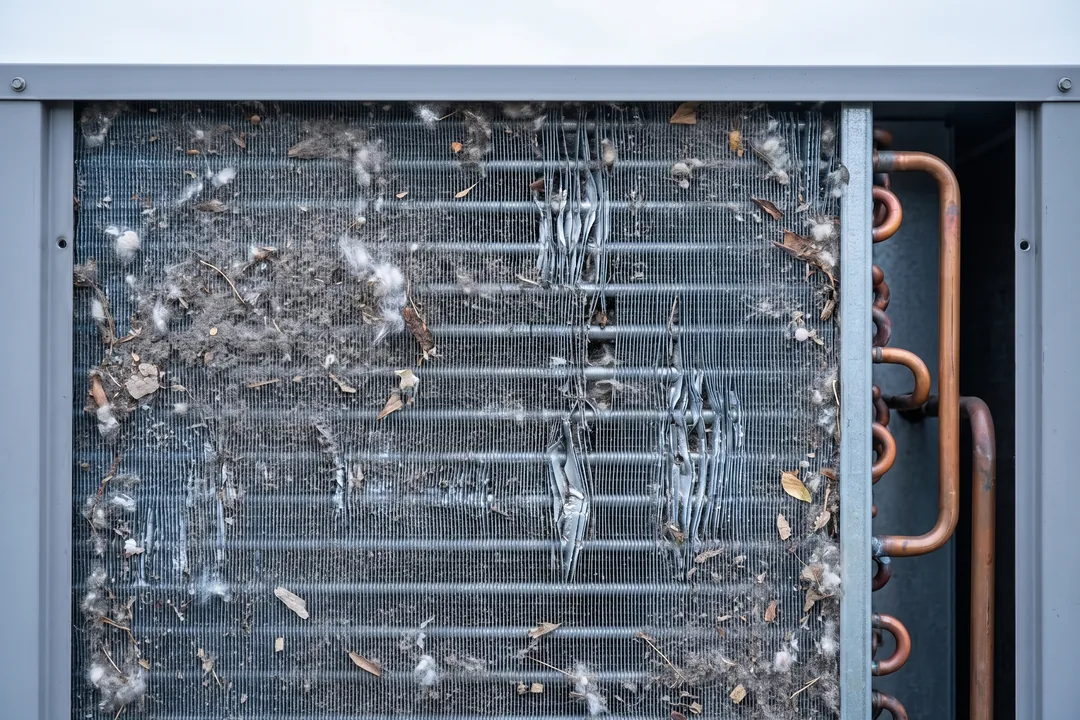
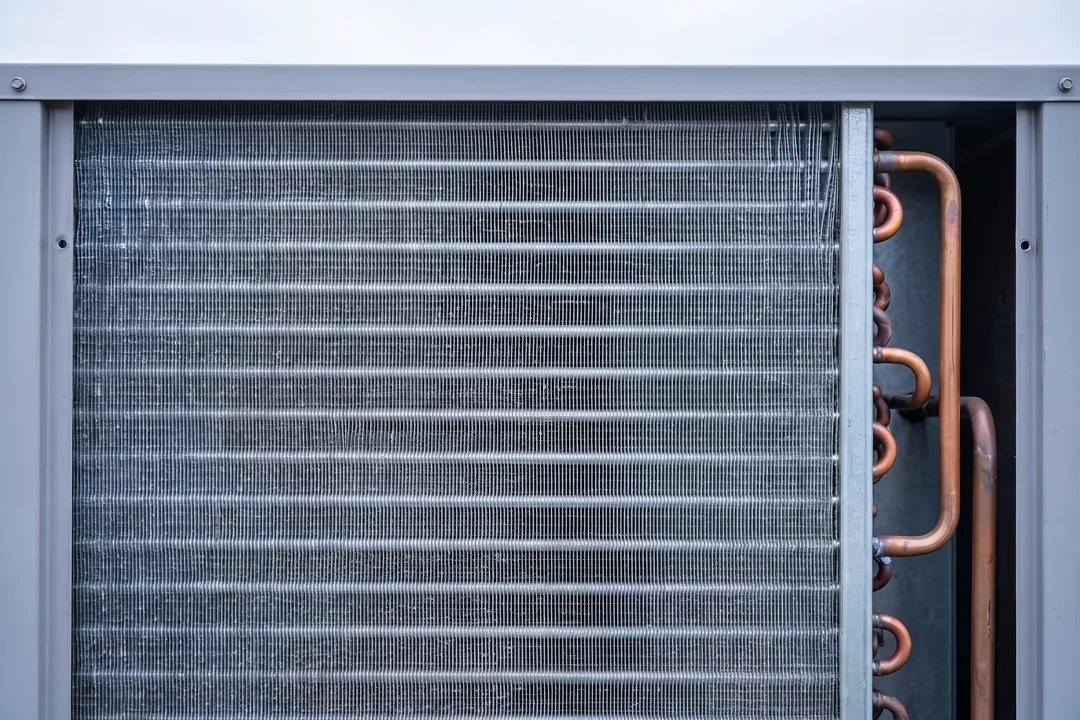
Finding · sampleRTU-07 · Condenser coil fouledAttention needed
- FoundOct 14 · attention needed · photo
- QuotedService Proposal sent to the client
- ApprovedApproved by the client’s facilities team
- CleanedOct 21 · coil cleaned · fins combed
- ClosedAfter photo added · finding closed
Illustration · invented client · sample data
The Refrigerant Record
Refrigerant tracking, circuit by circuit — the record your client asks for.
Every unit with refrigerant carries a record per circuit: the refrigerant type, the charge, every recovery, leak check and top-up, who did it and when. Your engineers log it on site; the office and your client read the same record, in order, with nothing reconstructed from job sheets.
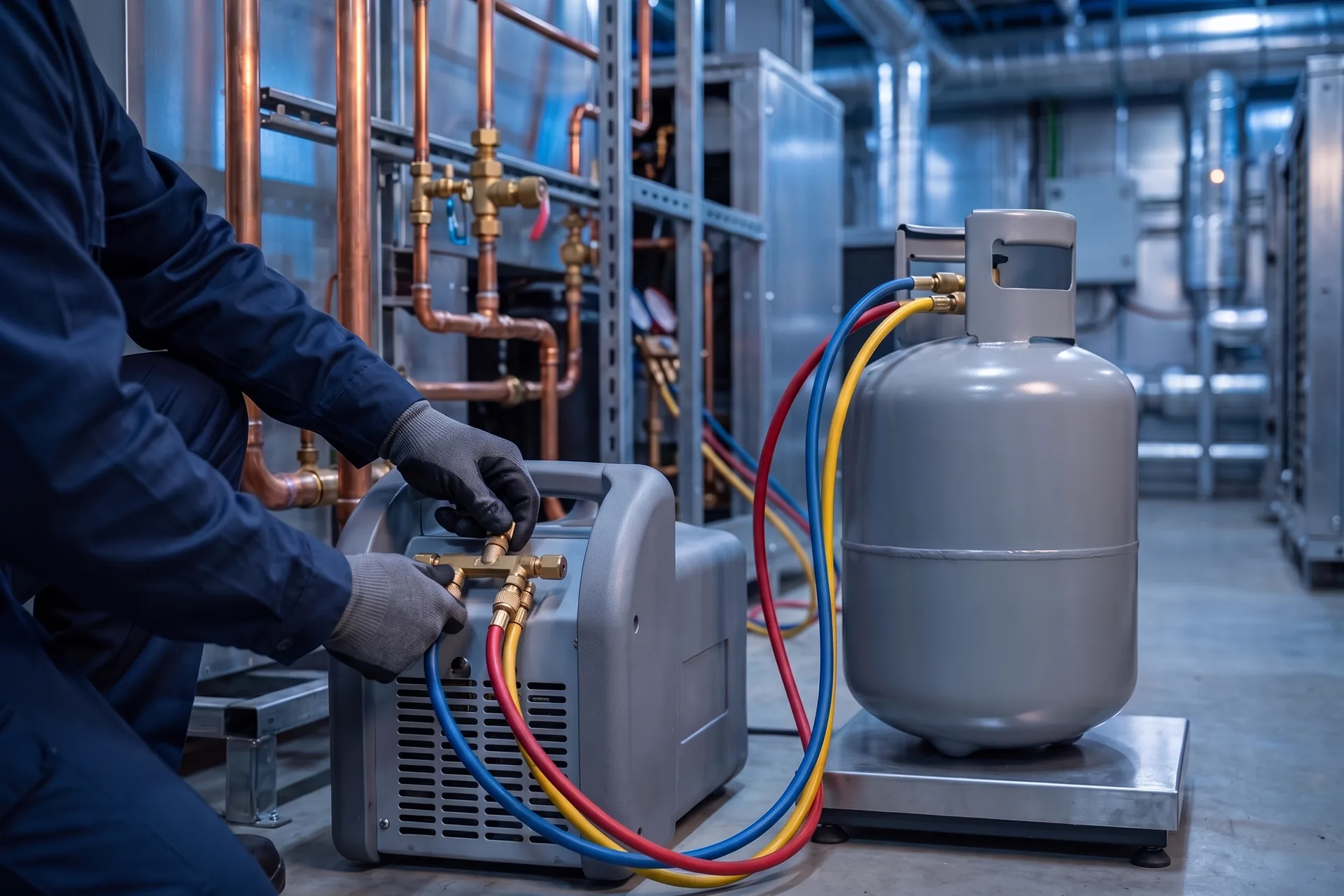
- Type, charge, recovery, leak checks and top-ups — per circuit, per unit.
- Who logged each entry and when, kept with the entry.
- Export the record for one unit, one building or the whole service agreement when your client or their auditor asks.
Refrigerant Record · sampleRTU-07 · Circuit 1R-410A
- Refrigerant
- R-410A
- Charge on the nameplate
- 14.6 lb
- Engineer’s certificate no.
- Entered by the engineer
| Date | Entry | Amount | Engineer |
|---|---|---|---|
| Mar 18 | Leak check · no leak found | — | D. Okafor |
| Jun 10 | Leak check · no leak found | — | D. Okafor |
| Aug 2 | Top-up after a leak repair | 1.3 lb | S. Brennan |
| Aug 2 | Leak check after repair · no leak found | — | S. Brennan |
| Oct 14 | Leak check · no leak found | — | D. Okafor |
Charge added, by visit (lb)
The limit you set for this circuit
Illustration · invented client · sample data · charges in the market’s unit
You set the limit per circuit, from your own procedures and the rules your clients work under. Frigalto draws every top-up against it and marks any entry that crosses it.
Building specification
What should be on the roof — against what is.
Each building carries its specification: the units it should have, by type. The registry is checked against it, so a unit that was removed, replaced or never added shows up before your client finds the gap.
Ashcombe Tower · specificationBelow specification
AHU-04 is in the specification but not in the registry. Add it, or update the specification.
Illustration · invented client · sample data
The Uptime Report
The report your client reads at renewal — compiled from what was done.
The Uptime Report is built from the record you already keep: the rounds completed, what each system inspection found, the deficiencies opened and closed, the refrigerant entries and each unit’s status. Frigalto drafts a short summary; you edit it, and nothing goes to your client until you send it.
Uptime Report · Ashcombe TowerAshcombe Property Group · July to September
- 3 of 3Maintenance rounds
- 11 of 11Units inspected
- 5 of 6Findings closed
- 11Circuits logged
- Rounds and system inspections
- Findings and deficiencies, open and closed
- Refrigerant Record by circuit
- Unit status and photo timelines
Summary Edited by you
All three quarterly rounds were completed on schedule and every unit was inspected. Five of six findings are closed; the open one, a fouled condenser coil on RTU-07, is approved for cleaning. The Refrigerant Record shows no leaks found this quarter after the August repair.
Frigalto records support refrigerant and maintenance record-keeping obligations. It does not certify compliance.
Illustration · invented client · sample data
- Goes out under your company’s name, as a PDF straight to an inbox, or as a web link.
- Sent when your client asks, when you choose, or on a schedule you fix — never by itself.
- One building or the whole service agreement, from the same record.
One job’s record instead of the quarter’s? See the Work Record →
Keep going
The rest of the job, on the same record.
The units and their records sit inside the work you already run: the calendar of rounds, the proposals and invoices, the terms your engineers use.
- Every round, on scheduleQuarterly and monthly rounds per building, seasonal changeovers and the call-out on a hot afternoon.See the calendar
- From finding to paidQuote the repair, take a deposit if you want one, start, finish, invoice — and keep the Work Record.See the journey
- The words, definedSystem inspection, building specification, leak check, top-up, plant area — answered plainly.Read the glossary
Questions
About units, inspections and refrigerant records
Does Frigalto make my client compliant with EPA Section 608 or F-Gas rules?
No. Frigalto records support refrigerant and maintenance record-keeping obligations. Frigalto does not issue EPA-608 or F-Gas certifications and does not verify operator-entered credentials. The rules your clients work under, and meeting them, stay with you and your client.
Can I set my own inspection protocols?
Yes. Each unit type is built to carry its own system inspection, and you decide the components and their order — for rooftop units, chillers, AHUs, VRF, split systems, cooling towers, heat pumps or anything else you maintain.
Where do the refrigerant limits come from?
From you. You set the limit for each circuit from your own procedures and the rules your clients work under; Frigalto draws every top-up against it and marks any entry that crosses it. Frigalto doesn’t supply regulatory thresholds.
Does the Uptime Report go to my client automatically?
Only if you set a schedule. Otherwise it goes when your client asks or when you choose to send it — in your company’s name, as a PDF straight to an inbox, or as a web link — after you have read and edited the summary.
Does Frigalto read data from the building management system?
No. Frigalto is not a BMS front end. The record is what your engineers inspect and log on site.
Are these features available today?
Frigalto is launching soon. What you see on this page is how it is built to work at launch; each scene is an illustration using an invented client and sample data.
Frigalto records support refrigerant and maintenance record-keeping obligations. Frigalto does not issue EPA-608 or F-Gas certifications and does not verify operator-entered credentials.
Founding access
Bring every unit and circuit onto one record.
Founding access is open to commercial HVAC and refrigeration maintenance firms that want their units, rounds and refrigerant records on one record from the first day.
Launching with a 14-day free trial. No card needed.